
- Home
- /
- Resources
Water Safety Resources
Expert guidance for every stage of water management
From initial assessment to ongoing compliance, find the resources you need to protect building occupants and reduce waterborne pathogen risk.

All Resources
Comprehensive library of water safety expertise
Blog
Industry news, regulatory updates, technical insights, and practical guidance on water safety and Legionella control.
Case studies
Real facilities, real results. See how hospitals and facilities achieved non-detect Legionella with LiquiTech.
Engineering tools & specs
CAD drawings, product specifications, installation guides, and technical data for engineers and contractors.
Research library
Peer-reviewed studies, white papers, and published research supporting copper-silver ionization and water system safety.
Webinars
Group training
Custom training programs for facility teams on water management, regulatory compliance, and system operation.
Customers served
Installations across industries
Reduction in sediment
Years of proven results
Common Questions
Common questions about water safety resources
Can’t find what you’re looking for? Contact our team for personalized guidance.
CMS regulations require healthcare facilities to maintain water management programs. ASHRAE 188 provides the standard framework, and Joint Commission inspections specifically target water safety compliance. State and local regulations may have additional requirements. Our water management program services help facilities meet all applicable standards with complete documentation.
Results vary by facility and treatment method. Our Georgia health system case study achieved non-detect status within 2 months after 14 years of chlorine failure. Copper-silver ionization typically shows measurable Legionella reduction within the first testing cycle, with sustained non-detect results achievable within 2-6 months when properly implemented.
Copper-silver ionization provides sustained residual protection without corroding pipes or equipment. Unlike oxidant-based chemicals, which require constant monitoring and cause infrastructure damage, copper-silver ions remain active throughout your distribution system for 24/7 protection. Our case studies show facilities achieving non-detect status after years of chlorine failure.
Point-of-use filters provide an additional layer of protection for high-risk areas like ICUs, transplant units, and immunocompromised patient rooms. They're also critical during outbreak response while building-wide treatments take effect. ASHRAE recommends point-of-use filtration as part of a multi-barrier approach for vulnerable populations.
Our water system assessment includes a facility walkthrough, review of your water management program, evaluation of high-risk areas, water quality testing, and recommendations for treatment solutions. Assessments are conducted by ASSE 12080-certified water safety specialists and include a detailed report with compliance guidance and implementation roadmap.
Featured Resources
Most popular resources from water safety professionals
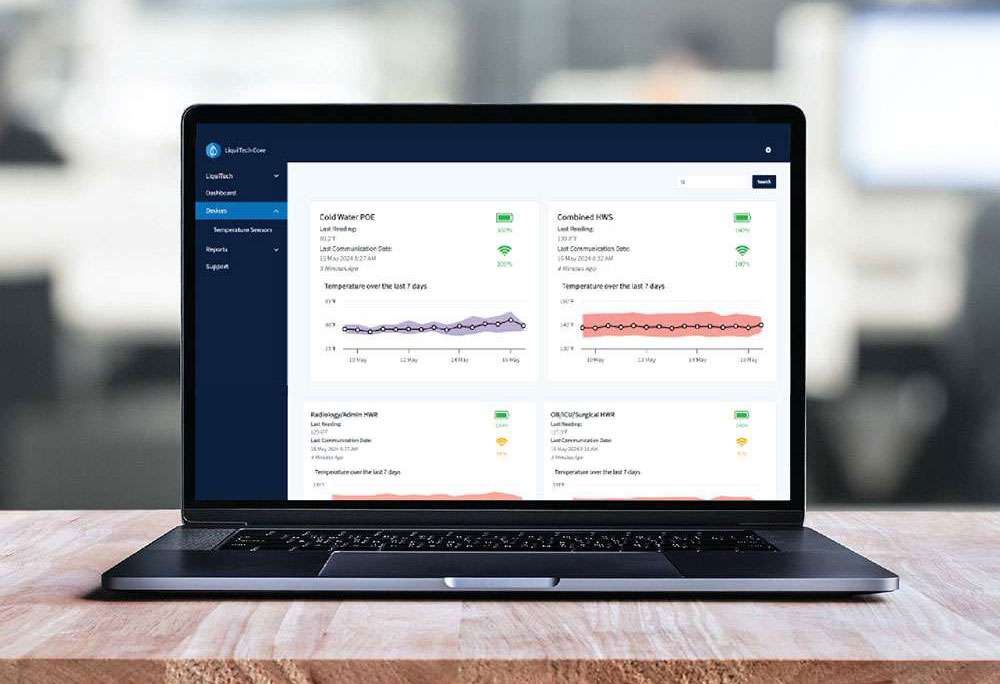

5 Questions to Ask Before Choosing a Water Treatment Vendor
Most water treatment solutions were built for municipal systems, not hospitals. This guide walks you through the five questions that will help you cut through vendor generalities, understand the real risks of chemical-based treatment, and set the right performance standards for your facility and the patients who depend on it every day.